


Selected Alternative

The combined Final Environmental Impact Statement (EIS) and Record of Decision (ROD) has been approved by the Federal Highway Administration which provides the information and rationale supporting Alternative C as the Selected Alternative. The Final EIS concludes that Alternative C would be the most cost-effective alternative and have the least impact on the environment. The ROD officially documents Alternative C as the Selected Alternative.
The Selected Alternative includes:

Construction of two new four-lane bridge spans with full shoulders across the Chesapeake Bay, providing additional transportation capacity, reliability and mobility while enhancing safety;
Removal of the existing Bay Bridge spans, addressing existing roadway deficiencies including narrow lanes and lack of shoulders, eliminating the need for major rehabilitation projects and associated lane closures and delays;

Improved navigational clearance to meet U.S. Coast Guard requirements. The navigational clearance will be 230 feet, which is the same as the new Francis Scott Key Bridge, allowing larger ships to access the Port of Baltimore;

Widening of US 50/301 to eight lanes (four per direction) from west of Oceanic Drive to east of Cox Creek to accommodate transitions to the new bridge spans;
Financial commitment for transit-related improvements, with a proposed one-time investment of up to $40 million;

An optional bicycle and pedestrian shared-use path, based on a future financial analysis performed by MDTA to determine whether implementation of a shared-use path will be feasible; and

A commitment for land preservation on the Eastern Shore.
Selected Alternative Lane Configuration
- The new bridge would provide a total of eight
12-foot lanes (four per direction) across the Chesapeake Bay on two new spans. - The Selected Alternative would retain the existing six lanes along
US 50/301 on both the Western and Eastern shores. - The bridge would provide 12-foot wide median
shoulders and 14‑foot wide outside shoulders.

US 50 / 301

New Bridge
Selected Alternative Example Bridge Construction Sequencing
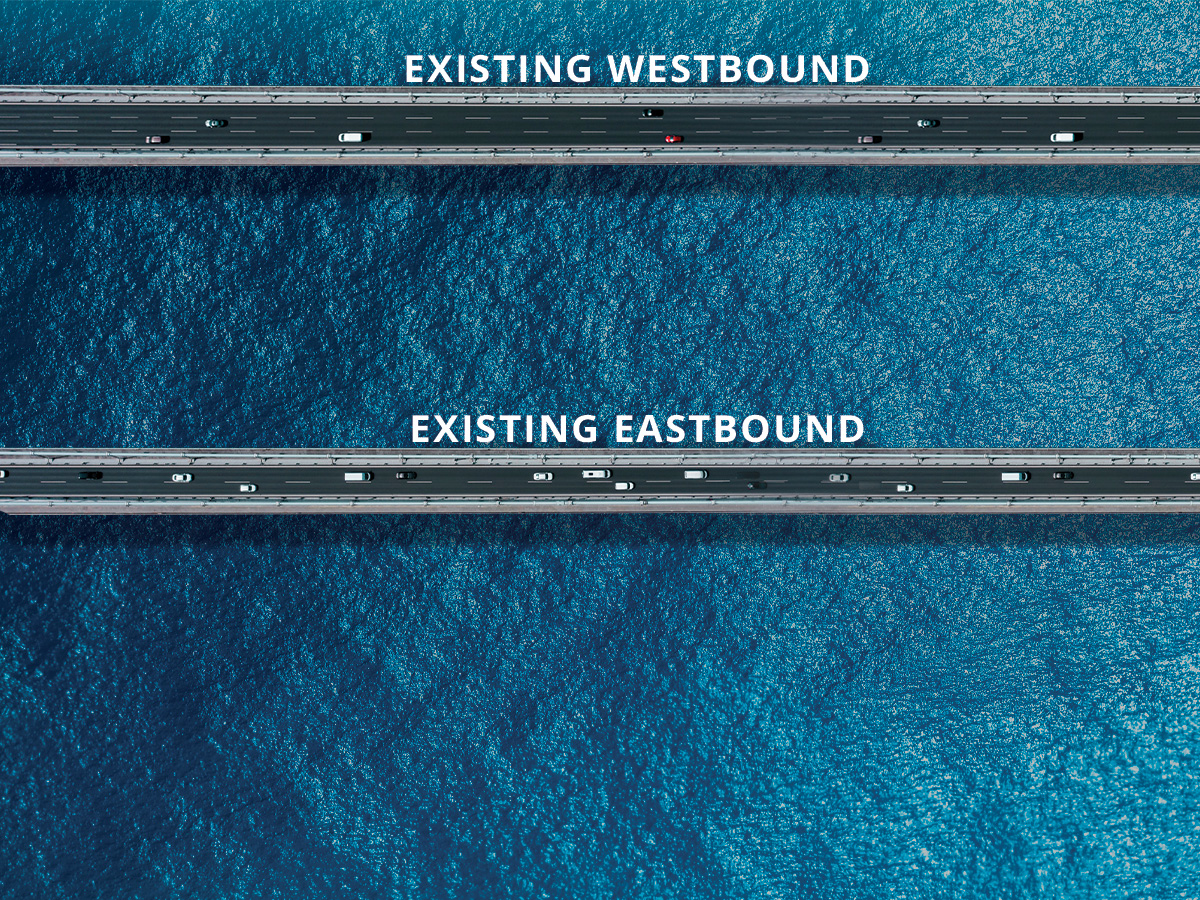
Step 1
Existing eastbound and westbound Chesapeake Bay Bridge spans.
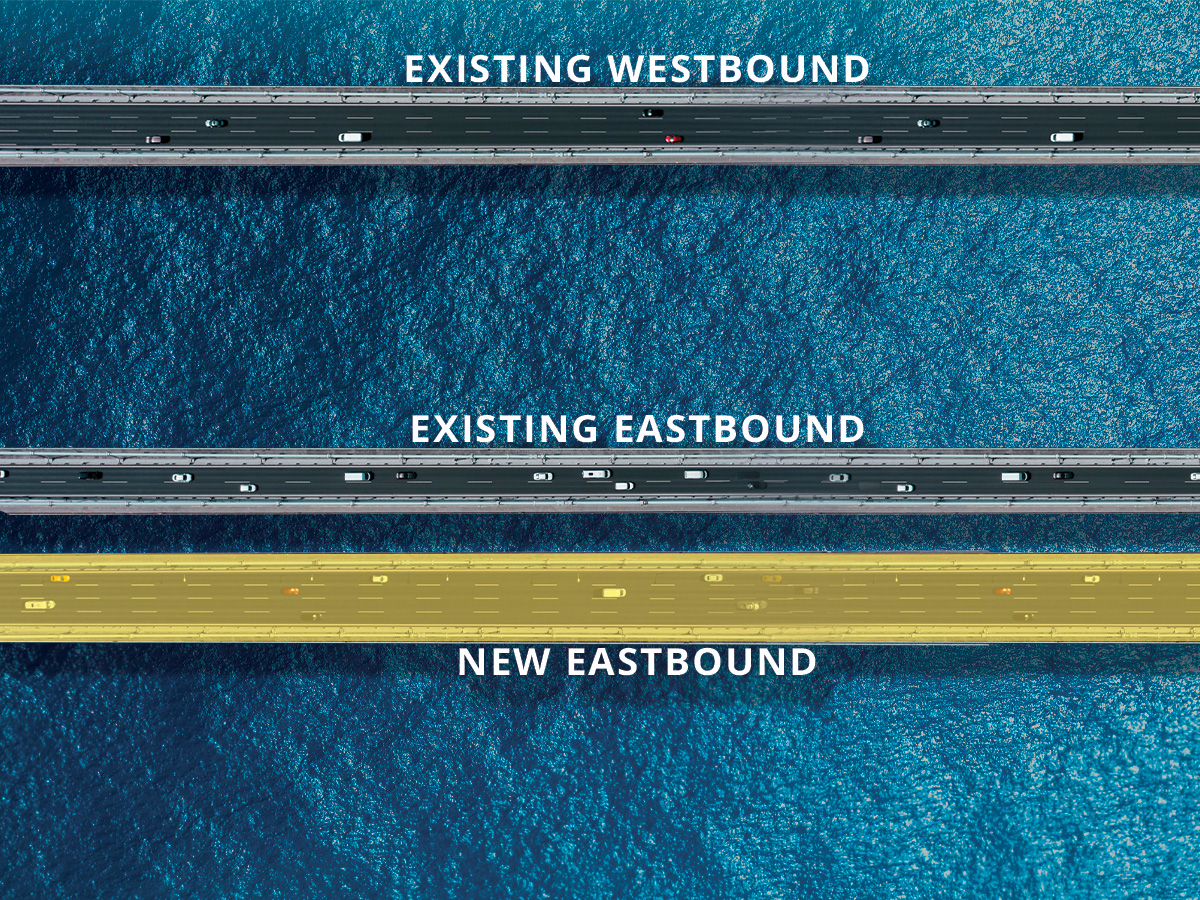
Step 2
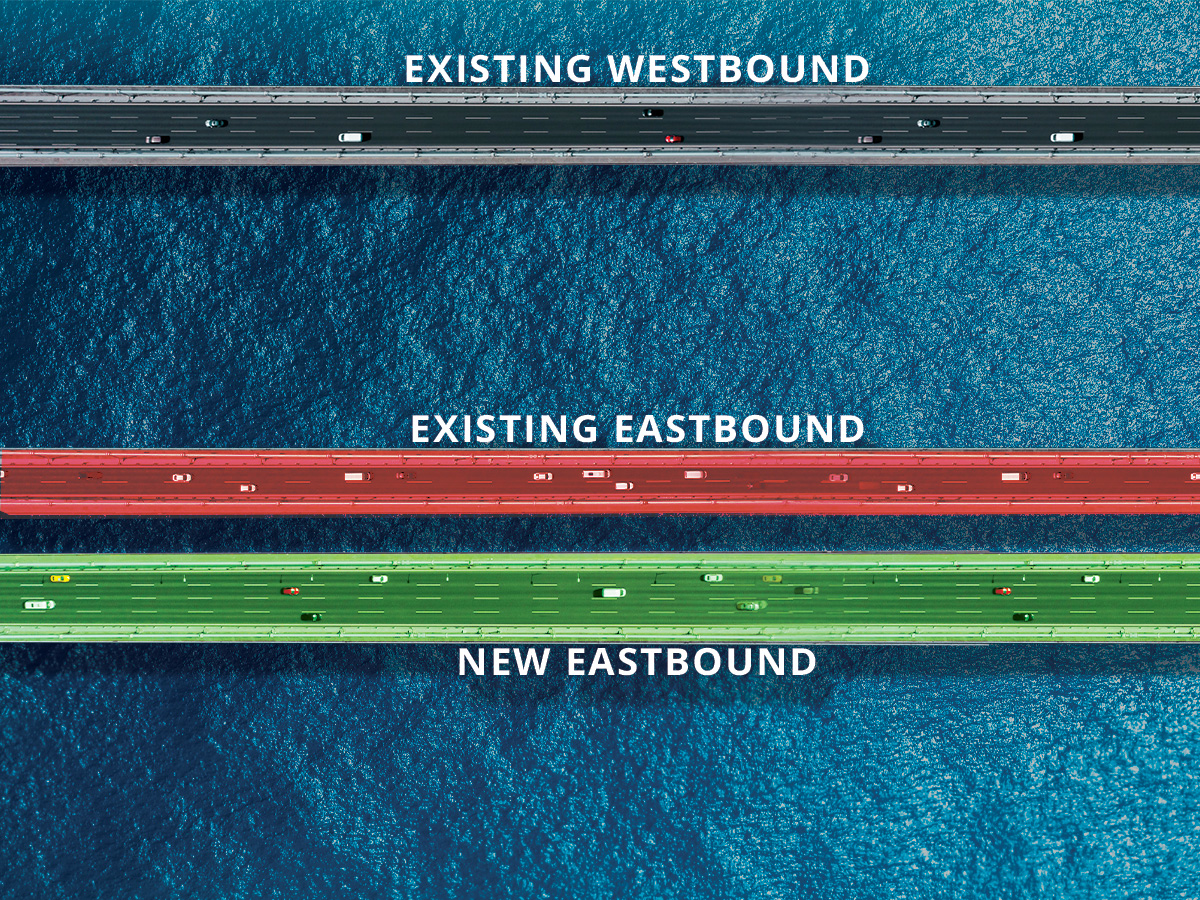
A new eastbound span (yellow) would be constructed first, south of the existing spans.
Step 3
Removal of the existing eastbound span (red) would follow.
Step 4
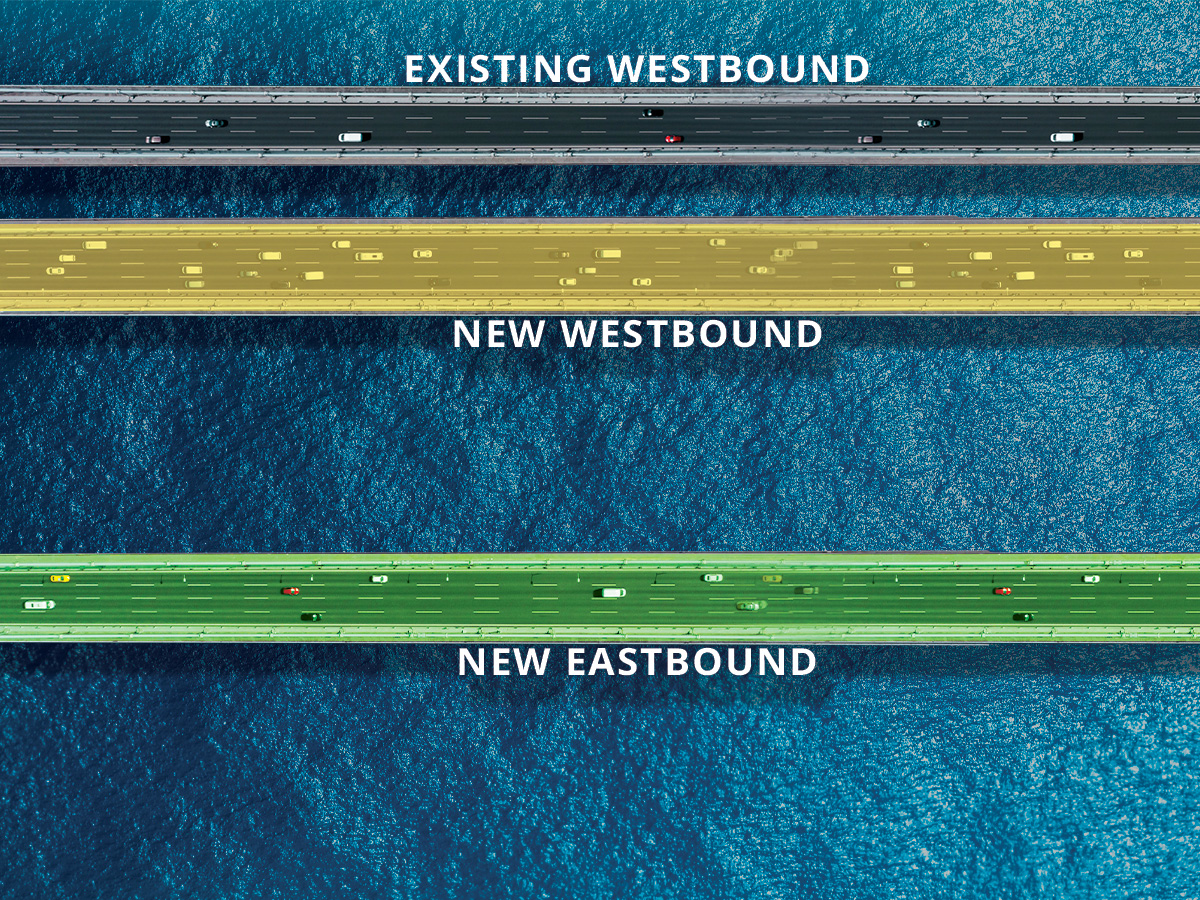
A new westbound span (yellow) would then be constructed between the existing bridge spans.
Step 5
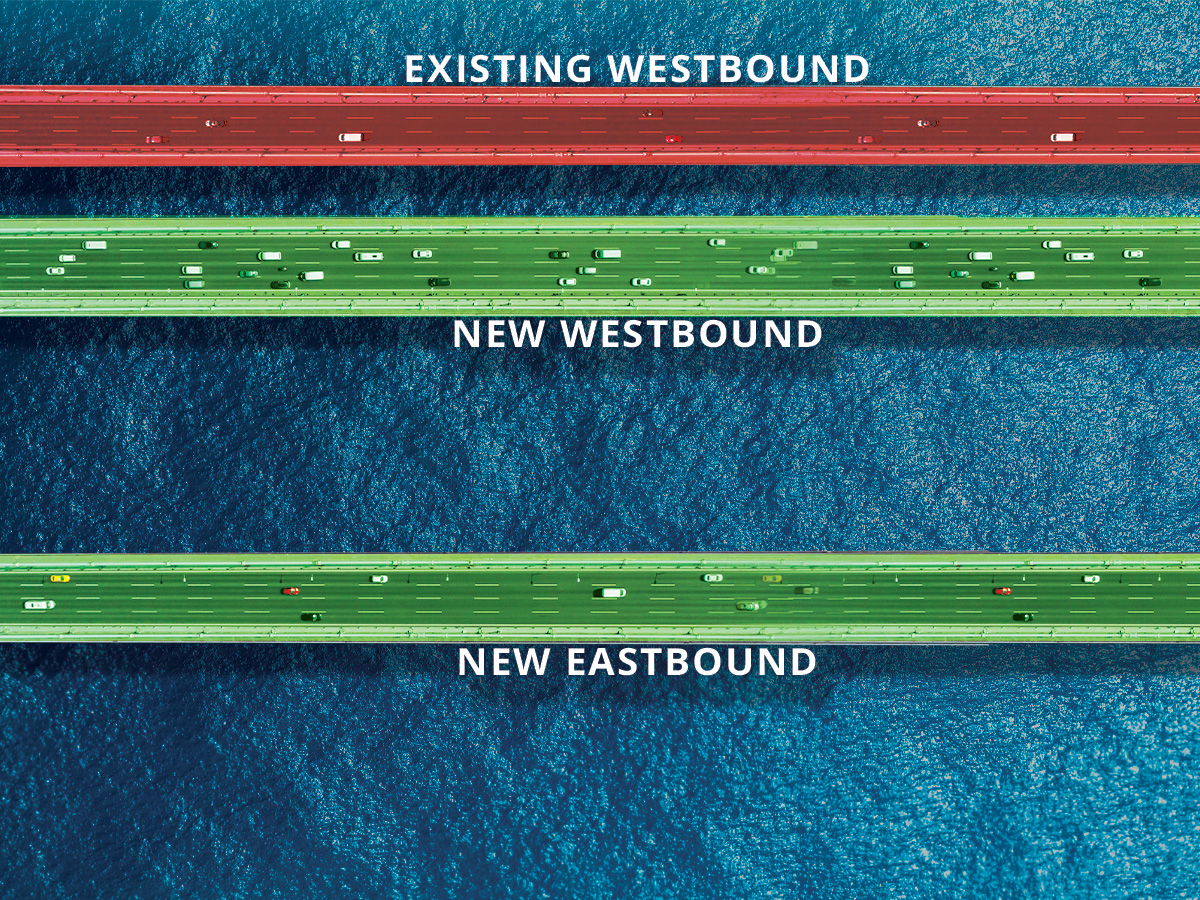
Removal of the existing westbound span (red) would follow.
Step 6
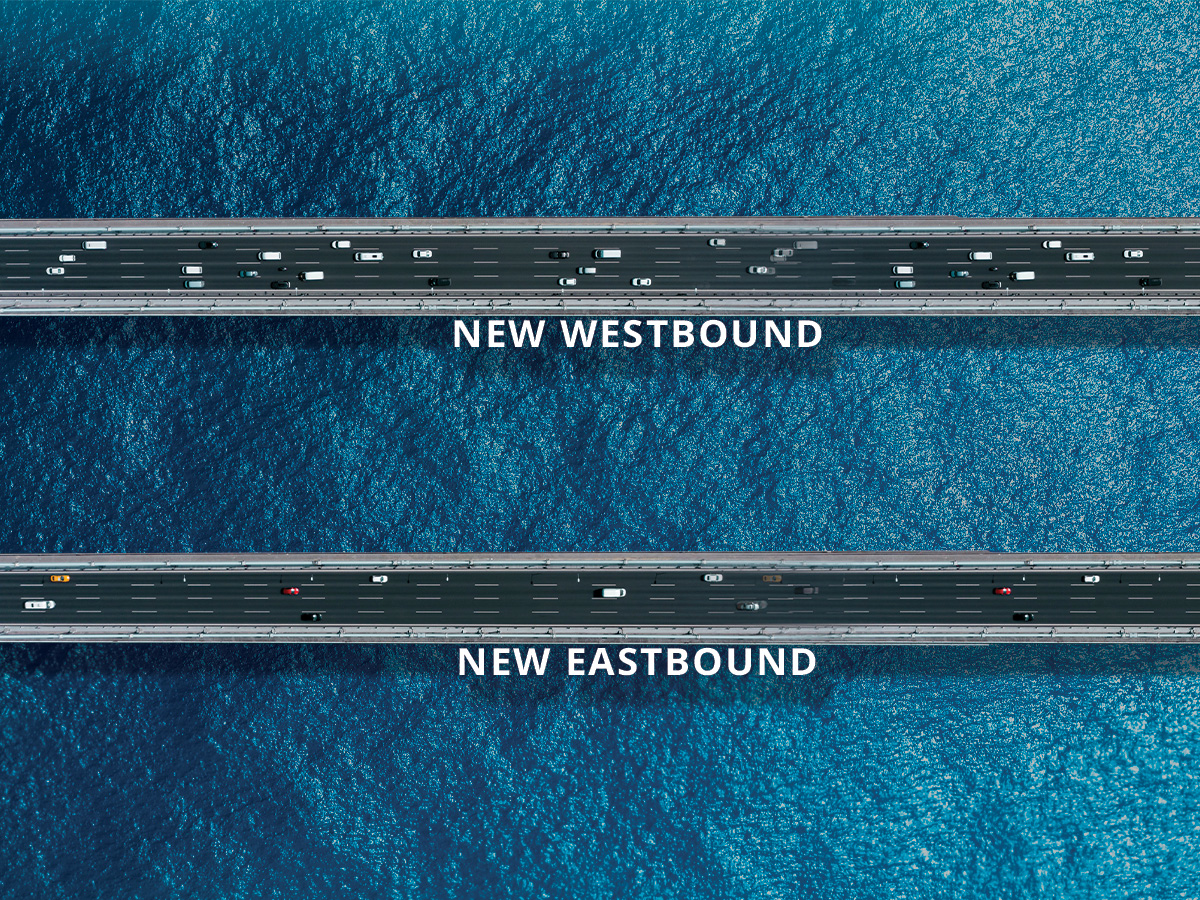
Completed new eastbound and westbound Chesapeake Bay Bridge spans.